

How Neck Pain and Whiplash Cause Headaches and What Actually Brings Relief
How Neck Pain and Whiplash Cause Headaches and What Actually Brings Relief
 Short answer:
Yes, neck pain and whiplash commonly cause headaches. In many cases, treating the neck, not the head, is the key to long-term relief.
Headaches that start at the base of the skull, worsen with neck movement, or appear after poor posture, travel, or injury are often linked to problems in the cervical spine. This guide explains why it happens, how to tell the difference between headache types, and what truly helps, from posture correction and targeted exercises to proper neck support.
Medical Disclaimer
This article is for educational and informational purposes only and is not intended as medical advice. It does not replace diagnosis, treatment, or guidance from a qualified healthcare professional. Always consult a physician, physical therapist, or other licensed provider regarding persistent headaches, neck pain, whiplash injuries, or any medical condition. Do not start or stop any treatment based solely on this content.
Quick Takeaways (Read This First)
• Neck-related headaches are often misdiagnosed as migraines or tension headaches
• Whiplash and poor posture can irritate cervical nerves that refer pain to the head
• Treating the neck frequently reduces or eliminates the headache
• Supportive neck positioning during rest, travel, and sleep plays a major role in recovery
• Long-term relief comes from alignment, not just painkillers
(Use the table of contents below to jump to what you need.)
Table of Contents
Why Neck Pain Causes Headaches
What Is a Cervicogenic Headache?
How Whiplash Triggers Head Pain
Neck Headaches vs Migraines vs Tension Headaches
Posture, Screens, and Modern Headache Triggers
Exercises That Help Neck-Related Headaches
Why Pillows and Neck Support Matter
Preventing Neck Headaches Long-Term
 1. Why Neck Pain Causes Headaches
The upper cervical spine (C1 to C3) shares nerve pathways with the head and face. When these joints, muscles, or nerves become irritated, pain is often felt in the head rather than the neck itself.
Common triggers include:
• Muscle tension and tightness
• Joint restriction in the cervical spine
• Nerve compression or inflammation
• Poor posture or prolonged head-forward positioning
This is why many people treat headaches for years without realizing the true source is their neck.
2. What Is a Cervicogenic Headache?
A cervicogenic headache is a headache caused by a problem in the neck.
Typical symptoms include:
• Pain that starts at the base of the skull
• Headache on one side of the head
• Pain that worsens with neck movement
• Reduced neck range of motion
• Tenderness in the neck or shoulders
Unlike migraines, cervicogenic headaches rarely involve nausea or visual aura. They are mechanical in origin, which means fixing the mechanics of the neck often fixes the headache.
3. How Whiplash Triggers Head Pain
Whiplash injuries do not only occur in car accidents. They can also happen from:
• Sudden stops during travel
• Sports injuries
• Falls
• Improper neck positioning during rest or sleep
Whiplash overstretches the muscles and ligaments of the neck, leading to:
• Joint instability
• Muscle guarding
• Nerve irritation
• Chronic inflammation
Even mild whiplash can result in persistent headaches months or years later if the neck never fully recovers.
4. Neck Headaches vs Migraines vs Tension Headaches
Neck-Related Headaches
• Triggered by posture or movement
• Often one-sided
• Neck stiffness present
Tension Headaches
• Band-like pressure around the head
• Stress-related
• Neck and shoulder tightness common
Migraines
• Throbbing pain
• Light and sound sensitivity
• Nausea or aura
Many people have overlapping symptoms, which is why neck causes are often missed.
5. Posture, Screens, and Modern Headache Triggers
Modern lifestyles are a perfect storm for neck-related headaches.
Key contributors:
• Prolonged phone and laptop use
• Forward head posture
• Poor desk ergonomics
• Unsupported neck during travel or naps
Every inch the head moves forward adds significant strain to the cervical spine. Over time, this strain leads to muscle fatigue, nerve compression, and recurring headaches.
6. Exercises That Help Neck-Related Headaches
Always move gently and stop if pain increases.
Helpful movements include:
• Chin tucks to restore alignment
• Upper trapezius stretches
• Shoulder blade retraction exercises
• Gentle neck rotations
Consistency matters more than intensity. These exercises work best when combined with proper neck support during rest.
7. Why Pillows and Neck Support Matter
Many headaches are aggravated, or even caused, by how the neck is positioned during:
• Sleep
• Naps
• Travel
• Reclining
When the neck is unsupported, cervical muscles remain partially contracted, preventing full relaxation and recovery.
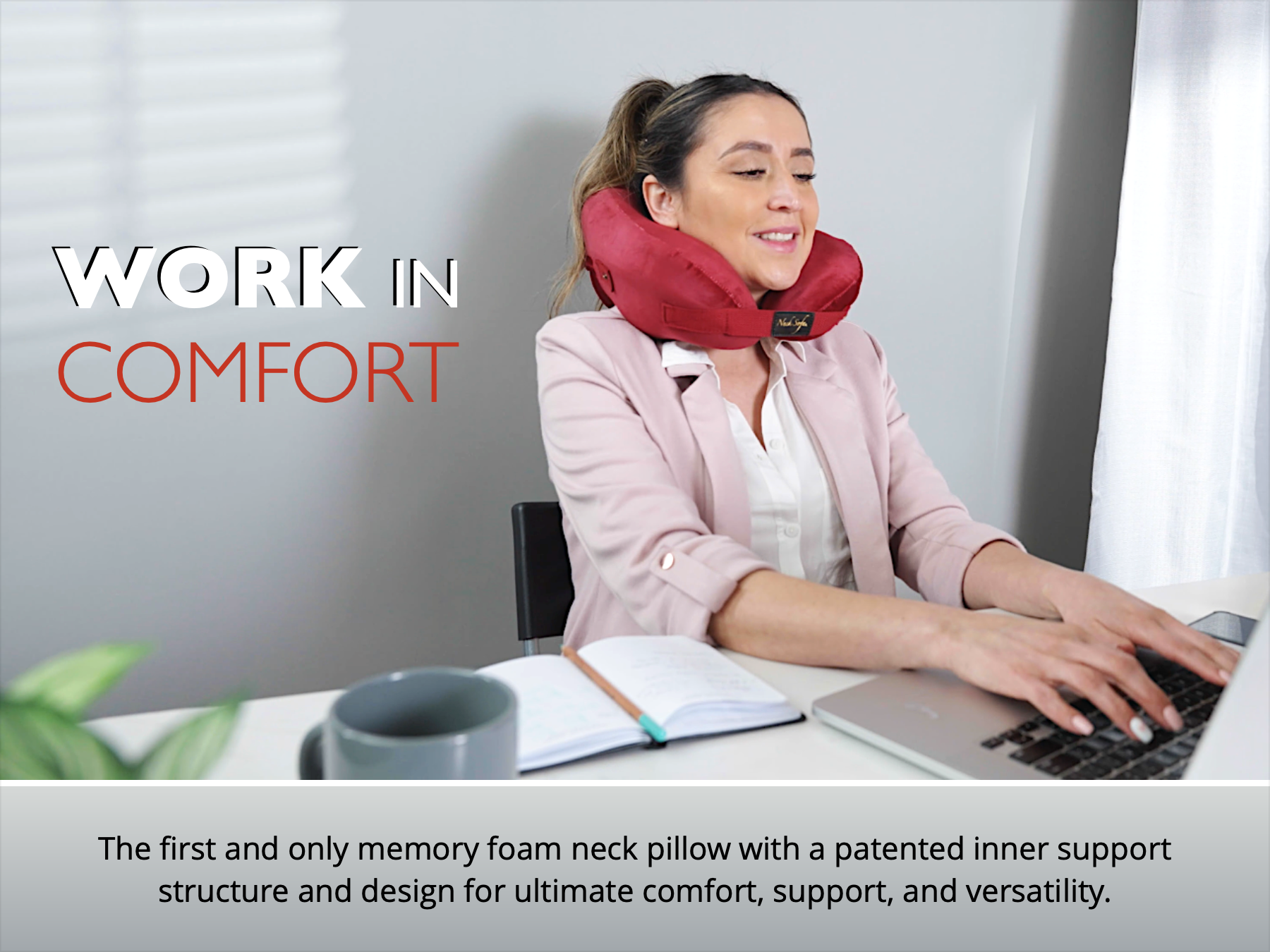
Supportive neck positioning during rest, travel, or naps can significantly reduce strain. Products like the Neck Sofa® Pillow are designed to maintain neutral alignment without forcing the neck into unnatural positions.
Unlike traditional pillows, the Neck Sofa® supports the natural curve of the neck while allowing the shoulders to relax, which is critical for people prone to neck-related headaches.
 8. Preventing Neck Headaches Long-Term
Long-term relief comes from addressing the cause, not just the pain.
Key strategies:
• Improve daily posture
• Take screen breaks
• Strengthen neck and upper back muscles
• Use proper neck support during rest and travel
• Address whiplash injuries early
When the neck is aligned, supported, and allowed to recover, headaches often diminish or disappear entirely.
Final Thoughts
Headaches caused by neck pain or whiplash are common, underdiagnosed, and highly treatable. If your headaches worsen with posture, movement, or prolonged sitting, your neck may be the missing piece.
This guide is designed as a flagship educational resource that builds trust, authority, and understanding while offering practical, supportive solutions for real relief.